DeepSeek Harness, Explained: It Looks Like Claude Code — So Why Call It a Harness?
Run npx @deepseek-ai/dsh web on Windows and a browser window opens fast: an input box in the center, with model, workspace, and permission-mode pickers alongside it, and a "preview" badge in the corner.
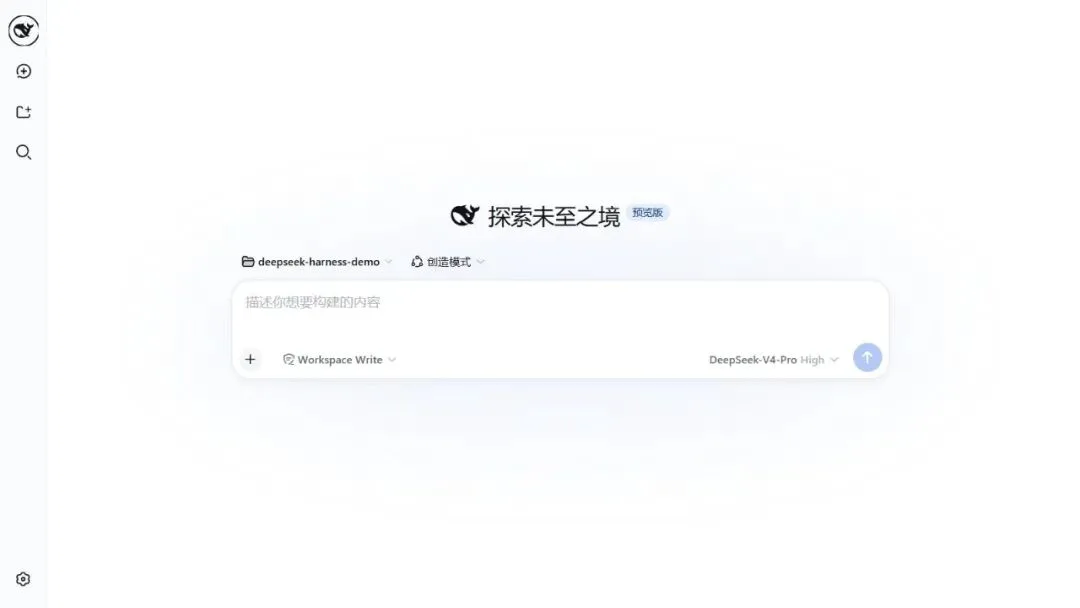
Anyone who's used Claude Code, Codex, or OpenCode will jump to the obvious conclusion: DeepSeek built a coding agent too. That's true, but only half the story — earlier posts already broke down its plugin runtime architecture and ran it end to end locally. This one backs up to a more basic question: if it looks like a coding agent, why does the team insist on calling it a Harness?
1. Fair enough — it is a coding agent
From a user's point of view, the workflow is familiar: open the Web UI, pick a model, choose a workspace, hand a task to the agent. Per the official usage guide, the agent can read and edit files, run commands, delegate sub-tasks, maintain a plan, and defer to a permission policy for anything that needs confirmation.
That's the basic shape of a coding agent — it enters a project, gathers context, calls tools, and decides the next step from the results, without the user having to assemble the underlying pieces first. That's what "looks like Claude Code" in the title is actually pointing at, not just visual similarity between two UIs.
Calling DeepSeek Harness a coding agent isn't wrong, but it doesn't explain why the name emphasizes Harness. To understand that, you have to pull an agent product apart into layers.
2. Harness is the layer that turns judgment into action
Many AI coding products bundle the model, the execution substrate, and the interface together. Understanding DeepSeek Harness means splitting those into three layers first:
- Model — understands the input and decides what to do next (read a file, edit code, run a test), but never reaches into the machine to execute anything itself.
- Harness — turns that judgment into action. Feeds the model context and tools, handles files, commands, permissions, sessions, and result feedback, then routes the outcome back to the model.
- Agent product — combines model and harness, then ships that combination to users through a terminal, editor, or web UI.
In short: model decides the next step → harness executes and reports back → agent product delivers the complete capability.
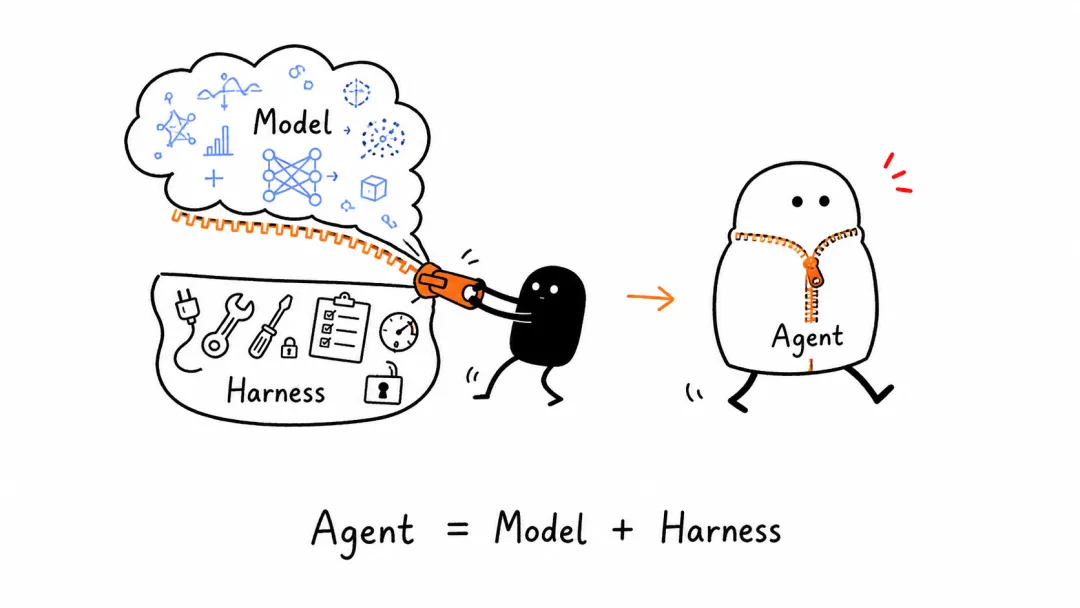
DeepSeek Harness ships as a complete product, but it also opens up how the execution substrate itself is composed. "Opening up the execution substrate" is still abstract, though — DeepSeek's own tagline puts it more concretely: Everything is a Plugin.
3. "Everything is a Plugin" isn't a marketplace slogan
Most products keep a fixed core and let plugins only extend the periphery. DeepSeek Harness pushes that boundary inside the agent itself: per the official architecture docs, the model adapter, tool registry, session log, and even the Agent Loop (judge → call a tool → receive the result → judge again) are all plugins.
That means plugins aren't just extending the product — they're what the product is made of. The underlying Cordis framework is what lets these plugins provide services, respond to events, and cleanly unregister their effects on unload.
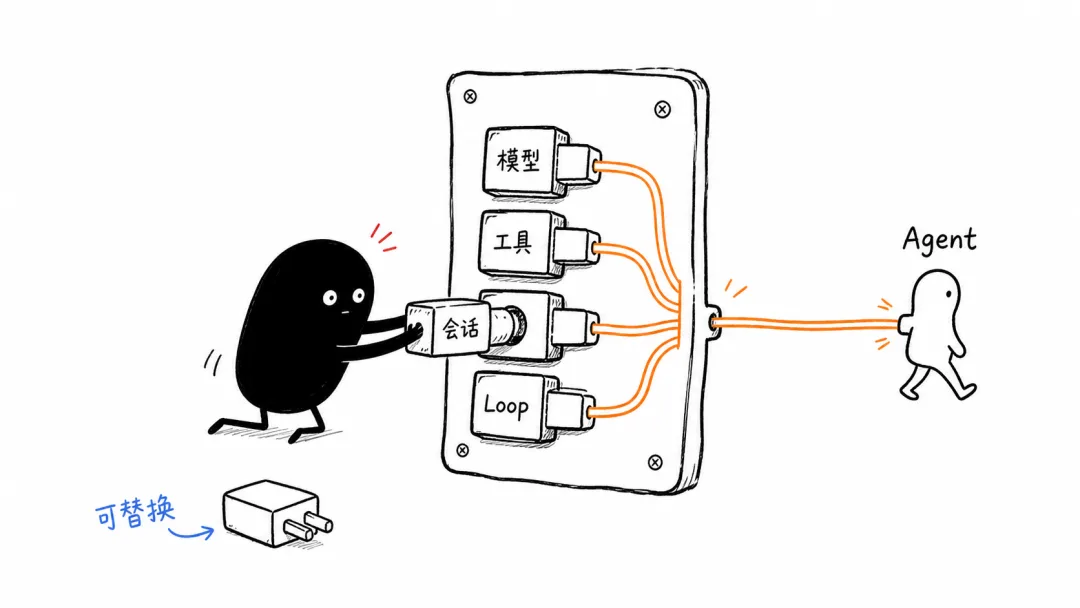
A running dsh instance can be thought of as a plugin tree assembled at startup — developers can swap the model, or reconfigure how files, commands, sandboxing, and permissions combine, without rewriting every capability at once. That's just what the architecture allows, though: composable doesn't mean the composing itself is simple, and swappable doesn't mean zero compatibility or maintenance cost.
4. This distinction mostly matters if you want to customize the agent
If you just want to get development work done, look at the default experience, task outcomes, and how well it verifies its own work first — plugin architecture alone doesn't make any specific task go better. It's only if you want to customize the agent that you need to care whether the model, tools, sandbox, and permissions can be recomposed on demand — that's where DeepSeek Harness's value mostly shows up.
As of August 16, 2026, the official repo still labels the project a Developer Preview and explicitly warns of breaking changes ahead. So this post can only confirm the product's shape and architectural direction — it can't prove it's better than other coding agents, or that the current version is production-ready. "Swappable" is a design fact; "how easy it is to actually swap" is a question only further hands-on testing can answer.
Conclusion: why call it Harness?
DeepSeek Harness looks like Claude Code because both can enter a project, gather context, call tools, and keep executing based on the results. The team calls it Harness because the project also opens up how the model, tools, sessions, permissions, and execution loop get composed together.
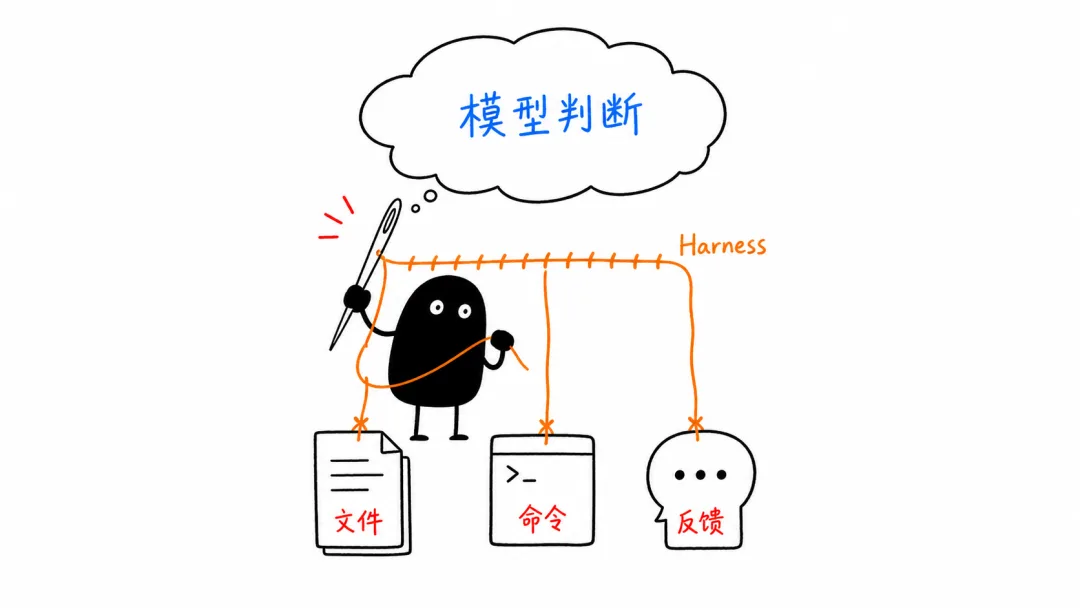
The most notable thing about it is that it turns "how an agent gets assembled" into something you can take apart and verify, rather than a black box.