Vibe Coding Best Practices: From 'Let AI Write Code' to a Verifiable Software Engineering Loop
Vibe Coding is going through a very visible change. The biggest shock is really in code-generation speed: a feature that used to take an afternoon — reading docs, designing the interface, writing the implementation, debugging — can now be produced by describing a few sentences, and an Agent will search the project, edit code, run commands, and hand back a working version. But the longer you use it, the more you notice a counterintuitive phenomenon:
Code generation is racing ahead, but real software delivery isn't moving at the same pace.
Skills multiply, workflows grow more complex, Agents edit more and more code at once, yet the same problems keep showing up: misunderstood requirements, lost context, architectural drift, insufficient tests, runaway change scope, long-task drift.
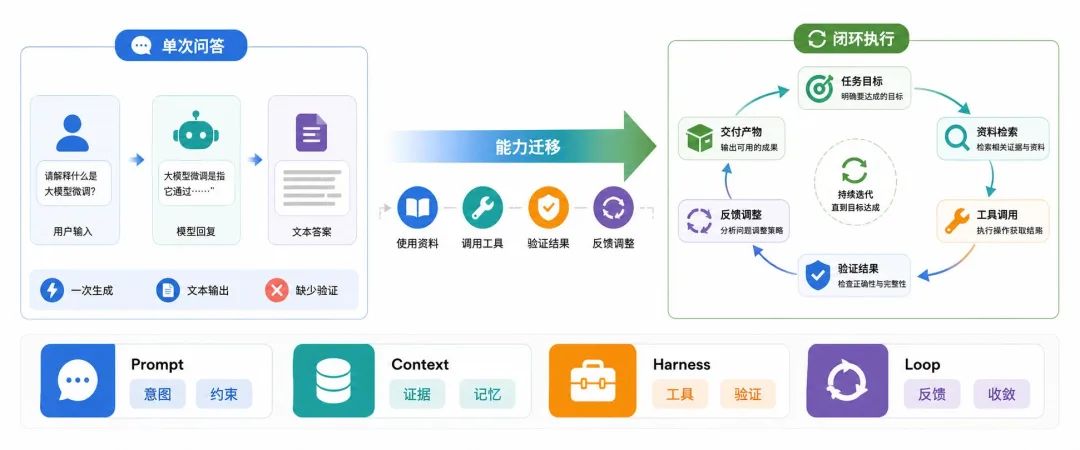
Vibe Coding can no longer be understood as just a prompt technique. It's moving past the beginner stage of natural-language interaction into Workflow, Harness, closed-loop execution, and eventually into a wholesale reshaping of the software development life cycle around the Agent.
The early question was "can the model write code?" The question now is gradually becoming "how does the model reliably complete an engineering task?" Those two questions look almost identical in English, but the engineering meaning is completely different.
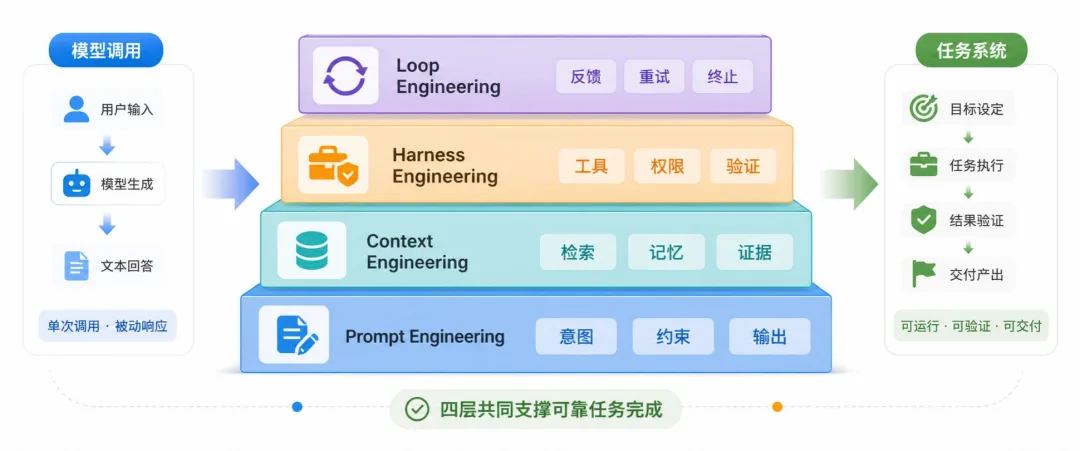
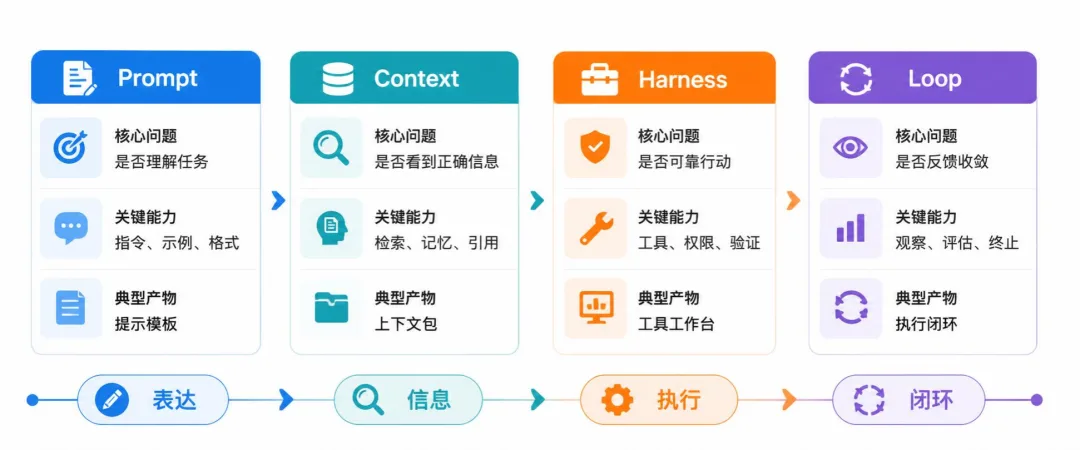
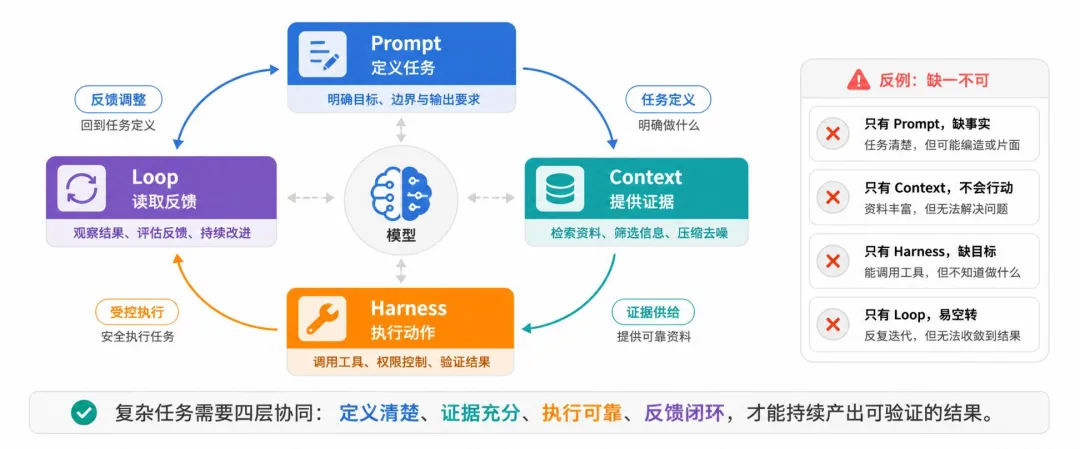
If we're going to talk about 2026 Vibe Coding best practices, we shouldn't focus only on prompt tricks. We should understand it as the joint product of four engineering capabilities:
- Prompt Engineering translates human intent into a clear task
- Context Engineering makes sure the Agent sees the right information at the right moment
- Harness Engineering provides tools, permissions, sandboxing, state, verification, and observability
- Loop Engineering lets the Agent, based on feedback from execution, decide whether to keep going, correct course, retry, or stop
Specification
      ↓
Prompt Engineering
      ↓
Context Engineering
      ↓
Harness Engineering
      ↓
Loop Engineering
      ↓
Verifiable Software
I. The Agent's biggest problem usually isn't that it can't write — it's that it doesn't know what counts as done
A lot of Vibe Coding failures look on the surface like model shortfalls, but they actually happen earlier, in the task-definition stage.
But for an Agent that's just entered the project context, that information doesn't exist. The model can only guess from its training data and the current code what "optimize" means — so it might optimize code structure while you actually care about Redis failover semantics; it might rewrite an entire component when you only wanted a small visual tweak; it might introduce a new caching scheme while the project has hard infrastructure constraints. The problem isn't that the model lacks the ability to write code — it's that the model hasn't been given the boundary conditions it would need to judge which direction is right.
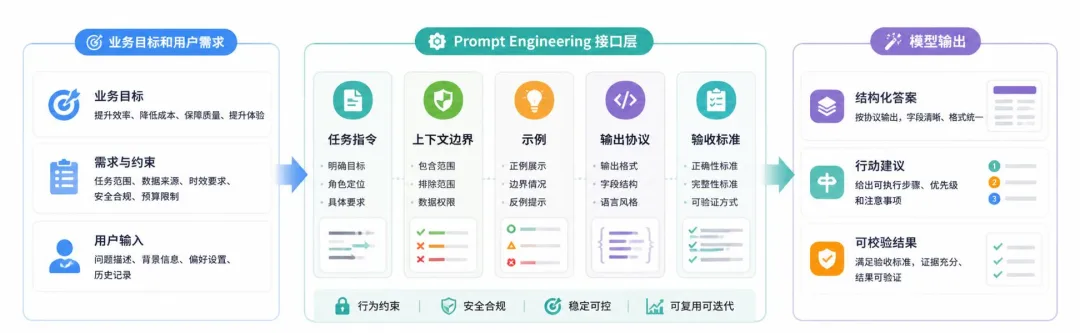
That's why the most underestimated skill in Vibe Coding is requirements expression and task decomposition. A more effective Coding Agent task should at least specify: what problem is being solved, where the relevant code is, which behaviors must not change, what the final deliverable should be, and how the work is going to be proven complete.
This looks like just a more detailed prompt, but it actually corresponds to a critical shift in Vibe Coding thinking: don't just tell the Agent what to do — also tell it what counts as done.
In traditional human development, the developer continuously judges during implementation whether the task is done, so a lot of the acceptance criteria don't need to be written down explicitly. But once the executor is an Agent, without an explicit definition of "done" the model can only guess when to stop.
II. The more the Agent can write, the more time is worth investing up front
One important change that Coding Agents bring is the dramatic drop in code-production cost. In traditional software development, writing a few thousand lines for a solution usually takes significant time, so "thinking while implementing" — while not ideal — was often still acceptable, because developers would keep noticing problems and correcting as they coded. With Agents, this cost structure has changed.
A vague requirement might be expanded into dozens of files and thousands of lines of changes in a short time, and once the direction is wrong, the faster the generation speed, the larger the scale of the wrong implementation. So an important — and somewhat counterintuitive — conclusion is: the stronger the Agent's coding ability, the thicker the requirements-clarification and design phases before implementation should be.
A single line of requirement might end up corresponding to ten thousand lines of code. An Agent can quickly generate those ten thousand lines, but it has no way of knowing on its own the project's compatibility requirements, performance budgets, and the business rules it must not touch. Requirements, design, and planning are therefore the biggest leverage points in Vibe Coding.
A relatively mature Agent development workflow shouldn't be Requirement → Code. It should be closer to Requirement → Research → Design → Plan → Implement → Verify → Review.
Suppose a wrong architectural decision ends up forcing the Agent to modify fifty files. Rejecting that plan at the Design stage might cost only a few minutes. But waiting until all the code has been generated and only then discovering the wrong direction, the repair cost blows up. So truly efficient Vibe Coding isn't about constantly reducing the number of times a human shows up in the flow — it's about putting the human only in the highest-leverage decision positions. Whether the requirement is right, whether the architecture is reasonable, whether the boundaries are acceptable — these judgments still need high-quality human input. Once the direction is set, code search, implementation, testing, and local fixes can be handed off to the Agent in large volume.
III. From re-explaining the project every time, to making the repo itself the context
A lot of people who use Coding Agents run into a kind of repeated labor. Every new session, you have to tell the Agent what tech stack the project uses, what the directory structure is, how to run the tests, what code style cannot be violated, which files must not be modified, what the database migration rules are. Doing it once is no problem, but if a team runs dozens or even hundreds of Agent sessions a day, re-explaining the same rules through natural language every time is essentially putting information that belongs in project infrastructure back into human-written Prompts.
This is exactly where files like AGENTS.md and CLAUDE.md matter. They are not "prompt files" in the simple sense — they are long-lived engineering documentation for Agents living inside the project. See Anthropic's Claude Code docs on project memory for how the project should expose a stable context entry point.
A more mature framing: don't keep telling the Agent how to develop the project — gradually let the project itself teach the Agent how to develop it. An Agent-Friendly Repository should make it easy to answer: what modules does the project have, what is each module responsible for; how do you spin up the dev environment; what are the standard test, lint, and typecheck commands; what architecture rules do new modules need to follow; which directories may be auto-modified; which operations require human confirmation; what are the database, API, config, and dependency compatibility requirements. Once the Agent enters the repo, the project itself's documentation brings it back to the correct context quickly.
IV. Long context isn't the answer — information selection is
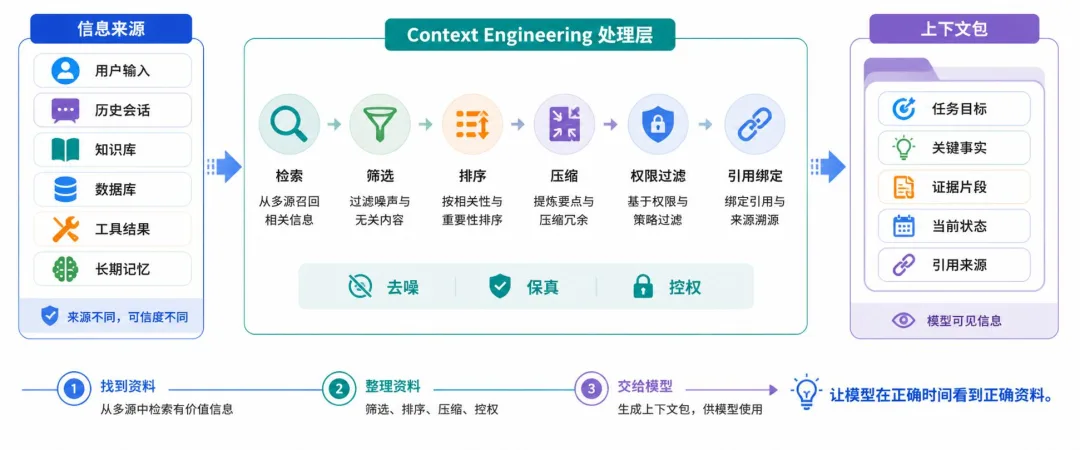
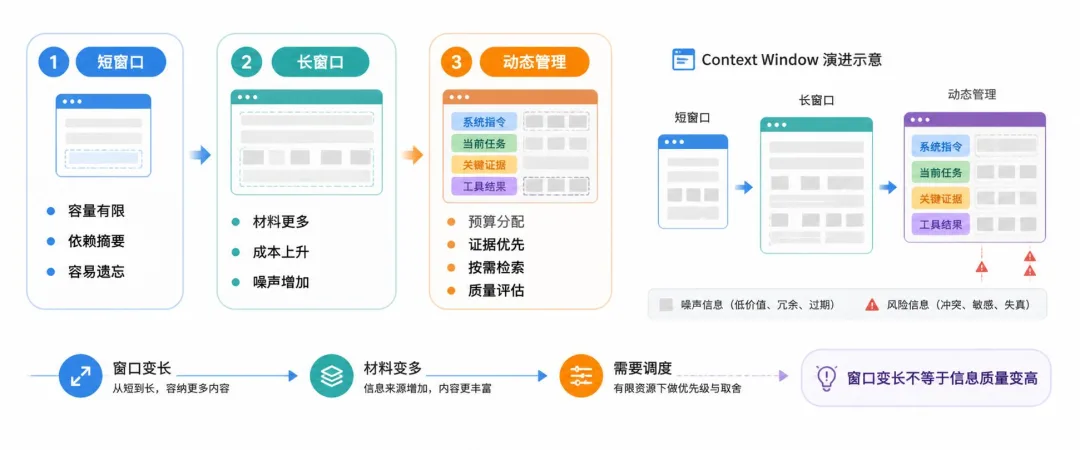
As model context windows have grown from tens of K to hundreds of K and even larger, it's easy to fall into the illusion that once a model can fit the whole repo, Context Engineering stops mattering. But in actual use, the problem is rarely that the context simply doesn't fit — it's that information density keeps falling. Dozens of code files, thousands of lines of logs, multiple test failures, chat history, design docs, and tool outputs mixed together in one window — even well below the token ceiling, the model has a much harder time finding what's actually important. Bigger context does not mean the model has equally stable attention over all of it.
So the core of Context Engineering isn't feeding the Agent more information — it's deciding what the Agent should see at each stage of the task. The source frames it this way: context management requires deciding which information must be kept, which should be summarized, re-retrieved, refreshed, or dropped. Prompt solves how the task is expressed; Context solves what the model can see while solving the task. This matters especially for Coding Agents, because a code repository is naturally a huge potential context source — without a filtering mechanism, the Agent will easily burn reasoning budget on large amounts of irrelevant code.
A reasonable way to work is dynamic context, not static. When the requirement first starts, the Agent only needs the project structure, the task description, and a few project rules. In the Research stage, search can broaden what's read, finding call chains, dependencies, and tests. In the Design stage, what's needed is the Research output and the key code — not every file that was looked at during search. In the Implement stage, the context should hold mostly the design, the plan, and the files currently being changed. In the Verify stage, the focus shifts again to test output, diffs, and failure information. In other words, the context should keep shifting through the stages of a task's execution.
Repository
    ↓
Search / Explore
    ↓
Relevant Files
    ↓
Research Summary
    ↓
Design
    ↓
Implementation Plan
    ↓
Current Task Context
V. Abstraction is an effective way to isolate Agents
Multi-Agent or Subagent is easily understood as a simple parallel-computing pattern: if one Agent needs ten minutes, run five Agents in parallel. But in real Coding workflows, the more important value of Subagents is rarely speed — it's isolating the huge intermediate contexts produced by different kinds of tasks.
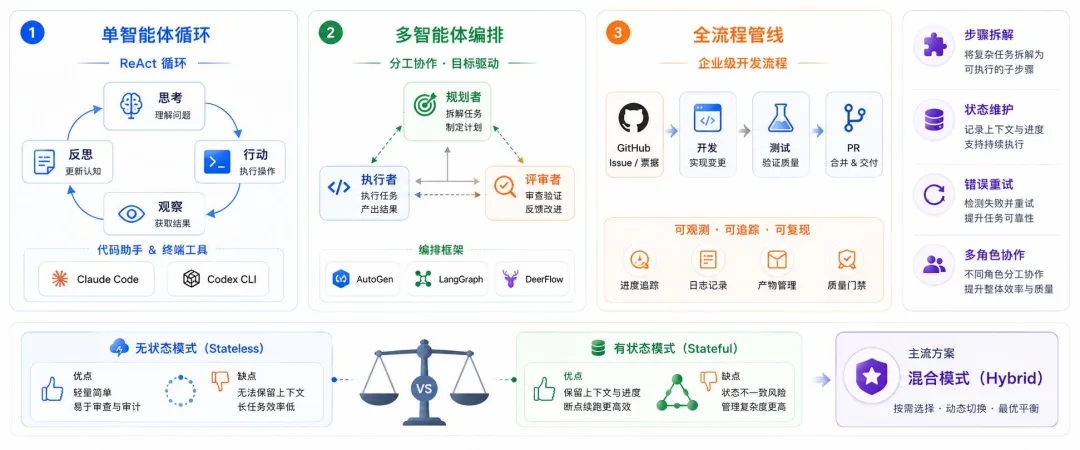
Say the main Agent is responsible for the whole feature. What it really needs to keep long-term is the goal, the design, the current plan, and the stage state. But to find a bug, it might need to read dozens of files; to analyze a test failure, it might need to process thousands of lines of logs; to do a security review, it might need to scan permissions, dependencies, and input boundaries. If all of this content flows into the Main Agent's context, information pollution sets in very quickly. A better approach is to have a Research Agent do project exploration, a Test Agent run and analyze tests, a Review Agent review the final Diff in an isolated context, and let the Main Agent only receive the high-density summaries from these Subagents.
Main Agent
                    │
        ┌───────────┼───────────┐
        ↓           ↓           ↓
    Research     Verify     Review
     Agent        Agent       Agent
        │           │           │
     代码探索     测试分析     独立审查
        │           │           │
        └────── Summary ────────┘
                    ↓
                Main Context
Split Agents along cognitive task and context boundaries, not mechanically along development roles. Tasks that need to read a lot of code but output a short conclusion are good fits for Subagents; review tasks that need an independent perspective to avoid the implementer's self-confirmation are good fits for Subagents; code exploration that's parallelizable and loosely coupled is good fits for Subagents. Conversely, a small feature with tight sequential dependencies doesn't need to be split into Multi-Agent just for the sake of it.
VI. The value of Skills is turning accidental success into repeatable process
After using a Coding Agent for a while, a lot of people accumulate large numbers of "useful prompts" — one for writing unit tests, one for doing code review, one for analyzing logs, one for generating API docs. In the short term, that's valuable. But as usage increases, the truly efficient approach should keep going one step further: distill stable, repeated operating flows into Skills.
The biggest difference between Skills and ordinary Prompts is that Skills don't just describe "how the model should answer" — they can further organize task steps, reference materials, scripts, tools, and even verification methods. For example, a "Fix Python Bug" Skill could require the Agent to first reproduce the bug, then locate the call chain, add a failing test, perform the minimal change, run Ruff, BasedPyright, and pytest, and finally output a summary of the change and the verification result. Once a flow like this has been verified to work, no developer should have to reinvent the same prompt for the next occurrence.
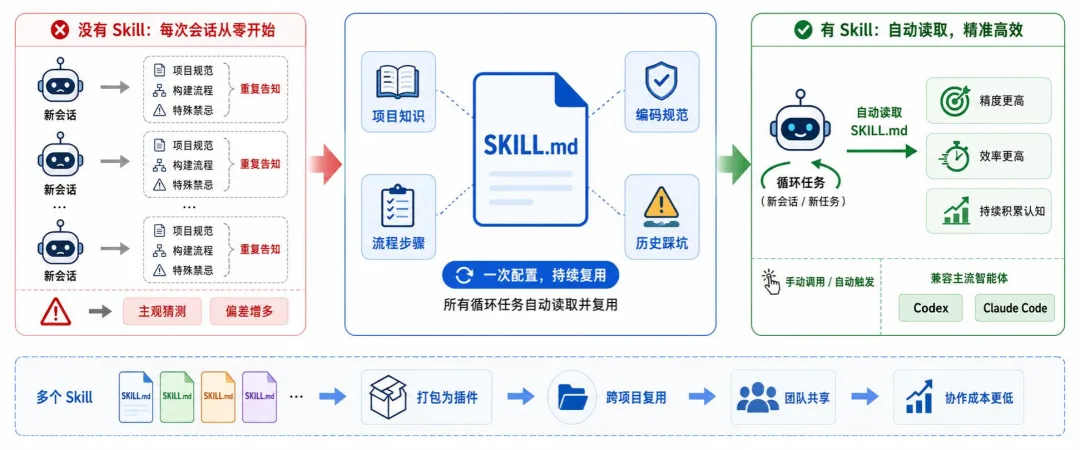
Once a task has been repeated a few times, you should consider turning it into a Skill. Meanwhile, the Model Context Protocol (MCP) is not the case that "the more the better" either — the tool count itself increases the model's selection cost and context burden. This actually points to a more general Vibe Coding principle: natural-language experience that keeps repeating should ultimately be converted into structured engineering assets as much as possible.
So a mature project's Agent capability won't just be one giant CLAUDE.md — it's more likely to evolve into a combination of project rules, Skills, tools, MCP, Hooks, Subagents, and verification systems. Rules handle long-term constraints, Skills handle reusable flows, MCP and tools extend action capability, Subagents handle context isolation, and Hooks turn "must-execute" requirements from natural-language suggestions into deterministic program behavior. When these come together, the Coding Agent actually starts to have a stable working environment.
VII. Agent reliability is ultimately an environment problem, not just a model problem
When a Coding Agent can only generate code in a chat box, the cost of model errors is relatively bounded. But once an Agent gains the ability to operate Shell, filesystems, Git, browsers, databases, cloud services, and even deployment systems, the risk climbs quickly. What developers really need to think about is no longer just whether the model writes code correctly, but what environment the Agent runs in, what resources it can access, which operations need approval, how to recover after a task fails, how long-running tasks save state, how to know what the Agent has done, and when to force-stop.
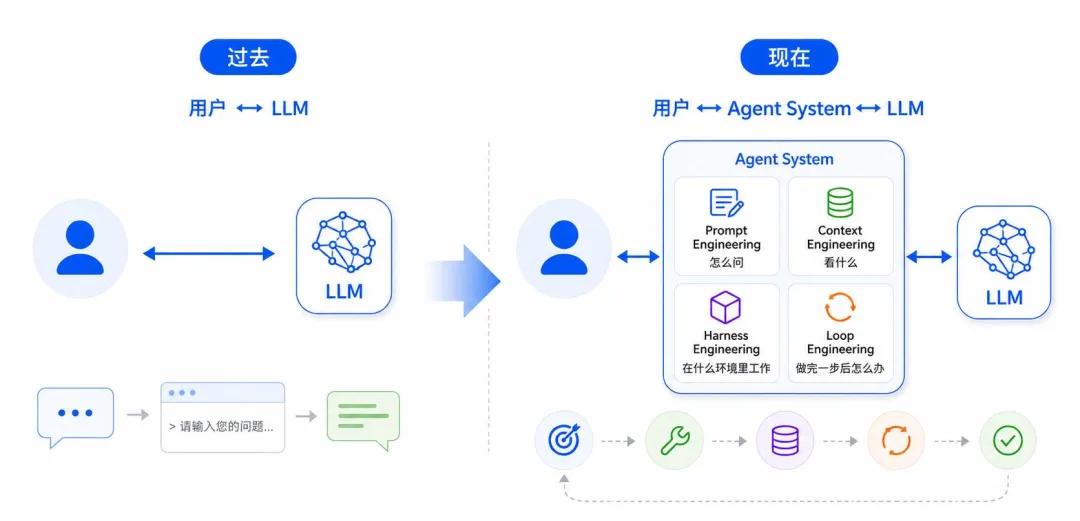
High-permission modes are better suited to disposable, recoverable environments with clear credential boundaries — not to everyday hosts that hold production secrets, personal files, and long-term credentials. This is an easily-overlooked security principle of Vibe Coding: the bigger the Agent's permissions, the more important the Harness becomes. Not because the Agent will necessarily do something bad, but because a system that can execute wrong plans at high speed needs stronger guards and rollback capability.
VIII. Workflow tells the Agent what to do next; Loop decides whether it can converge on its own
Many so-called Coding Agent Workflows are still essentially a fixed pipeline: plan, then code, then run tests, then finish. That's already a big improvement over a fully free Agent, because the process is more stable. But a fixed Workflow still doesn't answer a key question: what if the tests fail? What if the implementation diverges from the design? What if the first approach turns out to be unworkable? If the Agent has made three edits in a row with no improvement, when should it stop?
That's the difference between Loop Engineering and ordinary Workflow. A Workflow describes an expected path; a Loop is about how the system decides what to do next under real feedback. The source's definition is clear: the core objects of Loop Engineering are observation, evaluation, retry, termination conditions, and human-in-the-loop — it addresses how the system, after completing a step, keeps going or stops based on feedback. For a Coding Agent, this means "testing" is no longer just one stage in a process — it becomes an important observation signal the Agent uses to understand whether it's right.
Plan
          ↓
       Execute
          ↓
       Observe
          ↓
       Verify
          ↓
    ┌── Success? ──┐
    │              │
   Yes             No
    │              ↓
    │          Diagnose
    │              ↓
    │           Revise
    │              │
    └──── Done  ←──┘
A real closed loop has to handle at least: the Agent can perform actions, can see the results of those actions, can judge whether there's a gap between the result and the goal, can adjust strategy based on failure information, and has explicit retry, rollback, and stop mechanisms. The source says something worth remembering: permissions answer "can the Agent do it" — feedback and acceptance answer "did the Agent do it right."
IX. Why TDD especially fits Coding Agents
In traditional development, testing is often understood as something that comes after coding: the developer finishes the feature, then uses tests to check whether anything's wrong. But in Agentic Coding, the meaning of tests is more fundamental, because the model itself can't directly perceive the running state of software the way a person can. Once the Agent edits code, it must rely on external signals to judge whether its implementation is actually right, and tests happen to provide a structured, repeatable, relatively low-ambiguity feedback.
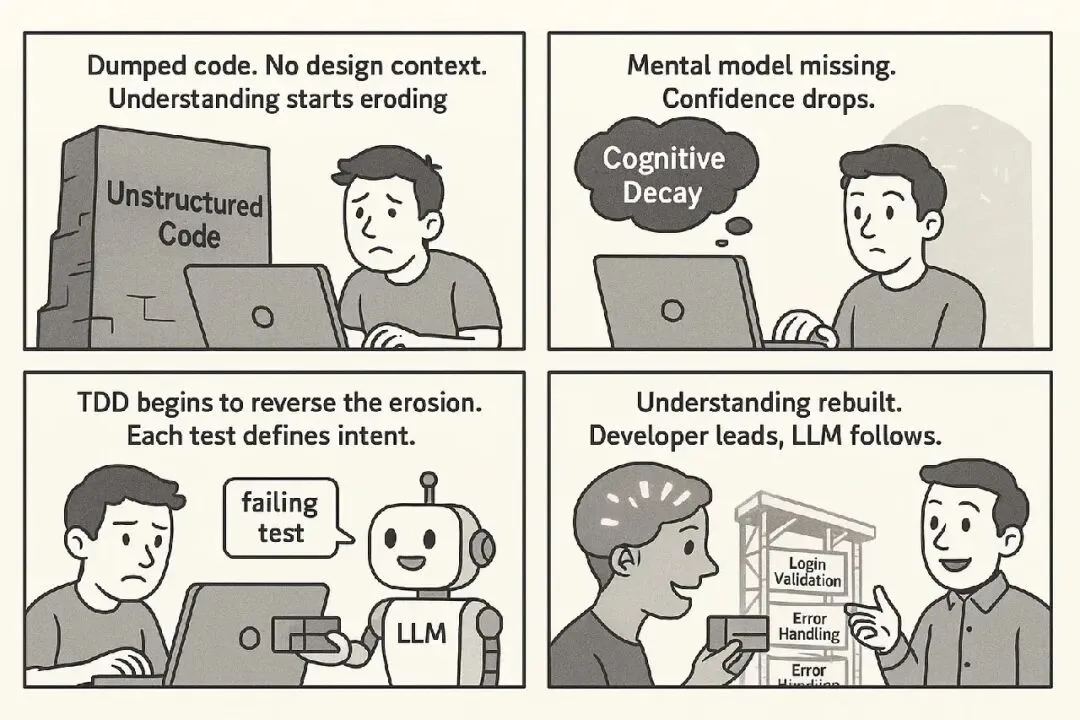
That's why TDD (Test-Driven Development) and Coding Agents are a natural fit. Writing a failing test first is equivalent to pre-building a machine-readable target for the Agent; after the Agent edits code, the test goes from Red to Green, which forms a very clear feedback loop. If the test still fails, the Agent can read the error, analyze the cause, and edit again. The whole development process shifts from "the model guesses whether it got it right" to "the model keeps approaching the target based on objective signals."
X. When Agents write faster than humans can read, the Review model has to change
As Coding Agents produce code faster and faster, an unavoidable problem arises: code-production speed eventually exceeds humans' line-by-line reading ability. If an Agent only modifies a few dozen lines a day, human Review is no problem; but if multiple Agents complete tasks in parallel, producing thousands or tens of thousands of lines of Diff a day, insisting that all code be reviewed line by line by senior engineers will quickly make humans the throughput bottleneck of the whole system.
, when the Agent produces more code than humans can line-by-line review, architecture design, detailed design, development plans, and acceptance criteria become more important instead. Human attention should gradually shift from "what does this line of code do" to "are the boundaries right, is the verification evidence trustworthy, and can we recover if it fails."
XI. Agents can easily optimize for correctness while piling up complexity
Another long-term problem with Agentic Coding is that models very easily optimize around the explicit metric. If the Harness's only instruction to the Agent is "pytest must pass," then what the Agent is most likely to learn is "find a way to make pytest pass." That's usually fine for short-term tasks, but for a large system maintained over years, "the current tests pass" alone doesn't represent engineering quality.
Today's Coding Agent training and evaluation tend to focus more on whether the task was completed, whether the tests pass, and whether any regression has occurred — but the model could perfectly well reach a correct result through a very complex implementation. A particular requirement's tests all passing does not mean the codebase will still be easy to modify in the future. For example, an Agent might quickly add a lot of special-case branches across five modules to solve a problem; from a testing perspective this could be completely correct, but half a year later when adding a similar feature, the team discovers that a small change requires understanding fifteen hidden logic points at the same time.
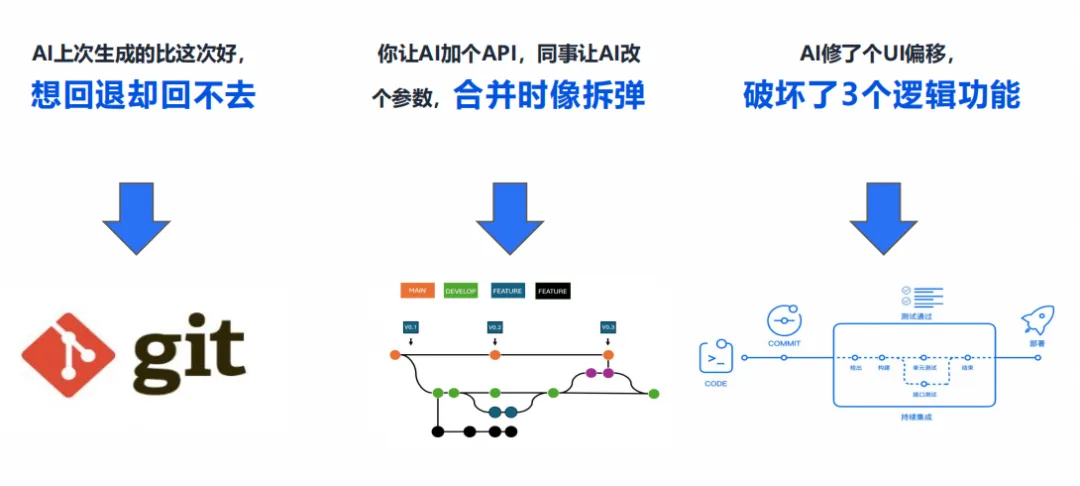
So when Vibe Coding moves from demos and short-term projects into long-lived products, the verification goals of the Harness also have to evolve. Unit tests answer "is the current behavior correct," but engineering systems also need to answer "will the next change still be tractable." That means the importance of Architecture Tests, module-dependency constraints, Complexity Checks, API Compatibility, Performance Budgets, Change Impact Analysis, and similar mechanisms will only grow.
XII. Vibe Coding ultimately isn't a tool race
Around Coding Agents today, a huge number of Workflows, Skills, MCPs, Plugins, Subagent Frameworks, and so-called "best configurations" have appeared. It's easy to fall into another kind of anxiety: am I behind because I haven't installed some Skill; does using Multi-Agent count as truly Agentic; does more MCP mean a stronger Agent.
A long tool list increases the model's selection difficulty and context consumption, and a complex solution can itself introduce new rule conflicts and maintenance cost. Vibe Coding doesn't have a single Workflow that every project should replicate. A personal prototype project and a financial core system have entirely different requirements for testing, permissions, Review, and recoverability; a two-thousand-line utility and a million-line monorepo can't use the exact same context strategy.
So the best practice is to derive engineering mechanisms from your own failure patterns. If the Agent often misunderstands requirements, add a Requirement Interview so the Agent surfaces unknowns before acting; if it often loses its way in a large repository, optimize code search, Research, and Context Compression.
XIII. The real metric of Vibe Coding shouldn't be how much code was generated
Once code generation becomes extremely cheap, "how many lines of code did you write today" will keep losing value. Even the number of Tool Calls the Agent made, or the number of files it changed, is just a process metric. What really determines a software team's efficiency is how long it takes for a requirement to go from being raised to forming a verifiable delivery, and how long it takes to recover from failure.
Suppose an Agent generates 50,000 lines of code in an hour, but a lot of that output needs human rework — the high code output has no meaning. Conversely, if another Workflow only generates 5,000 lines, but the requirements are accurately understood, the tests are thorough, and almost no rework is needed, the latter's actual delivery efficiency may be much higher. So evaluating Vibe Coding should ultimately get closer to software engineering's own metrics: task Lead Time, first-pass verification pass rate, regression rate, mean failure-recovery time, number of human interventions, Token and compute cost per task, and the understanding cost of the next change to the same module.
One common discussion Vibe Coding provokes is "will programmers disappear?" But if you look at the actual engineering flow, a more accurate framing might be: the human's position keeps moving upward. In the earliest development mode, the human was responsible for writing the code; in the simple Vibe Coding stage, the human was responsible for telling the model what to write; in pair-programming mode, the human is more responsible for requirements, design, and acceptance; in Harness mode, the human starts being responsible for environment, permissions, feedback loops, and stop conditions; moving further into an Agent software factory, the human is mainly responsible for Specification, Evaluation, risk boundaries, and exception decisions. The source summarizes this capability ladder in a similar way: from the beginner stage of saying what you're thinking clearly, to the pair-programming stage of design and acceptance, then to the Harness stage of feedback loops and stop conditions, and finally at the higher stage of holding the line on specs, risk, and system understandability.
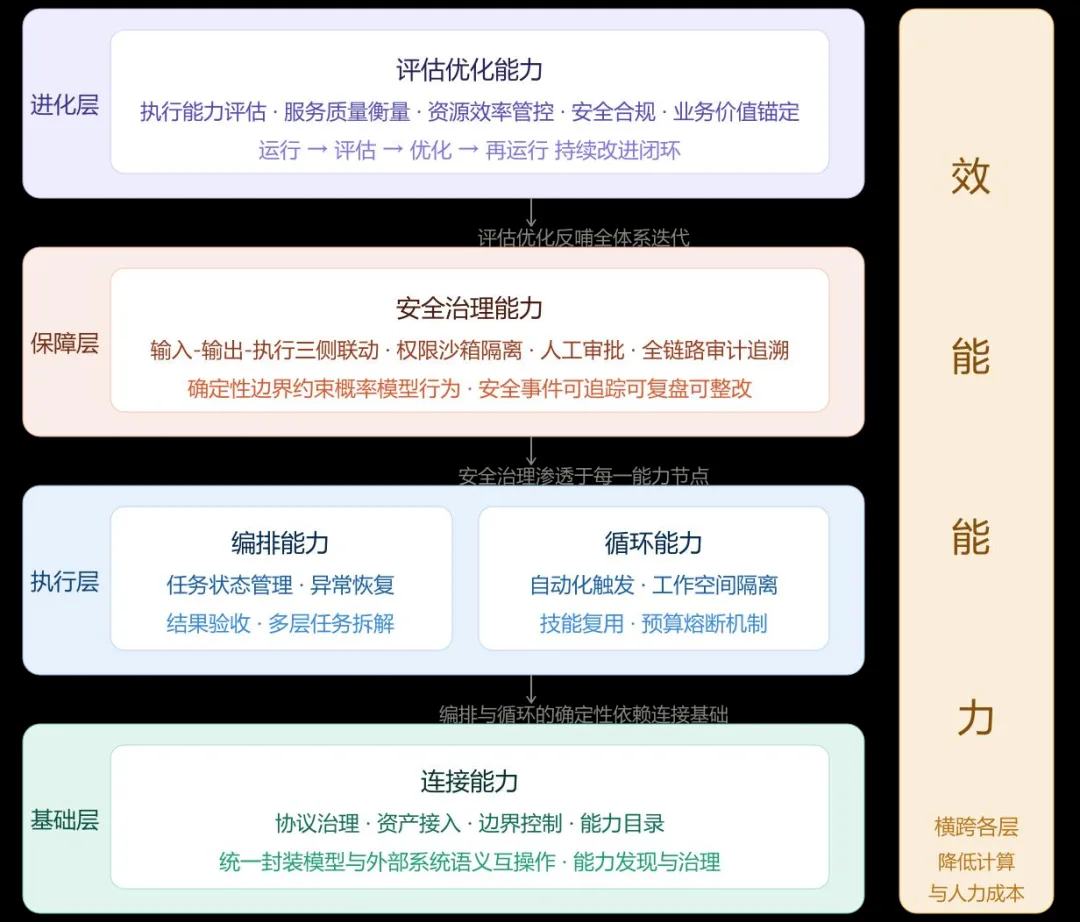
From this angle, the relationship between future excellent engineers and Coding Agents won't simply be "AI replaces programmers." It's more like "the programmer gradually transforms from a code producer into a designer of the software production system." The Agent handles large volumes of exploration, implementation, testing, and local fixes; the human handles direction, design boundaries, feedback definitions, and exception handling. Once that division of labor is established, productivity improvements stop being just "typing faster" and start becoming real improvements in SDLC efficiency.
XIV. The best practice of Vibe Coding is, in essence, designing a system where AI keeps writing the right code
Back to the original question: what are Vibe Coding best practices?
The answer isn't a particular Prompt, or a particular Coding Agent, or installing the most Skills, MCPs, or Plugins. The truly mature approach is to gradually build an engineering system around the Agent: clear Specifications before the task starts; the Agent gets the right information through Context Engineering; the project itself exposes long-lived knowledge through AGENTS.md, design documents, and rules; repeated flows get distilled into Skills; deterministic requirements are encoded into Hooks, Tests, and CI; the Agent runs inside a Sandbox with clear permission boundaries; the execution can be observed; after failure it can retry or roll back; the final result has to pass verification via executable evidence; and for large systems, extra protection of architecture and long-term maintainability is needed.
So Vibe Coding's evolution can be summarized as a clear path:
Prompt
"Tell the Agent what to do"
        ↓
Context
"Let the Agent see the right information"
        ↓
Workflow
"Let the Agent execute in a reasonable order"
        ↓
Harness
"Let the Agent work in a reliable environment"
        ↓
Loop
"Let the Agent self-correct based on feedback"
        ↓
Software Engineering System
"Make the whole development process continuously verifiable"
What really changes here is that we no longer see a large language model as a "particularly smart code generator" and start treating it as a probabilistic execution component in the software system. Since it's probabilistic, we can't assume every step is right; since we can't guarantee correctness, we need context, tools, verification, permissions, feedback, and recovery mechanisms; and as those mechanisms mature, the Agent's capability can truly move from occasional demo effects to stable software engineering productivity.
So when 2026 talks about Vibe Coding, the questions that are actually worth paying attention to are no longer "how much code can AI write in one shot" but a set of engineering questions that the industry has been forming since the term Vibe Coding was coined by Andrej Karpathy:
Can it understand the right problem? Can it act in the right context? Can it get reliable feedback? Can it recover after making a mistake? And finally, can it produce enough evidence to prove the task is done?
Truly mature Vibe Coding is putting Specification, Context, Tools, Harness, Verification, and Feedback together to build a complete closed loop from requirements to verifiable delivery.
The best Vibe Coding systems don't let AI write more code — they let AI keep writing code, keep modifying code, and the entire software system still stays understandable, verifiable, recoverable, and sustainably evolvable.